
Firstly, we would like to thank everybody who took the time to complete our recent questionnaire. We had a great response, which gives us a good insight into how DMPK (Drug Metabolism and Pharmacokinetics) departments are currently structured, especially in the UK.
The idea behind this questionnaire was to investigate on a larger scale what we have experienced first-hand and heard anecdotally over the years. Finding professionals with significant DMPK experience in the UK is no easy task, especially outside of the Oxford/Cambridge and North-Western scientific hubs. There are few specialists, and there seem to be distinct differences in how DMPK knowledge is taught and applied, often depending on where individuals have received their training.
Thanks to an increased understanding of the required ADME (Absorption, Distribution, Metabolism, Excretion) properties of candidates, the number of compounds failing in clinical stages due to pharmacokinetic issues has been decreasing over time1. Despite this progress, however, there are still no dedicated DMPK programs at the undergraduate level, and very few at master’s level in the UK. While more universities are incorporating a limited amount of DMPK-related content into their courses, the absence of specialised Pharmacokinetics undergraduate degrees means that many chemists, biologists, mathematicians and pharmacologists, amongst others, have had nearly all their training ‘on-the job’ when starting in a DMPK position.
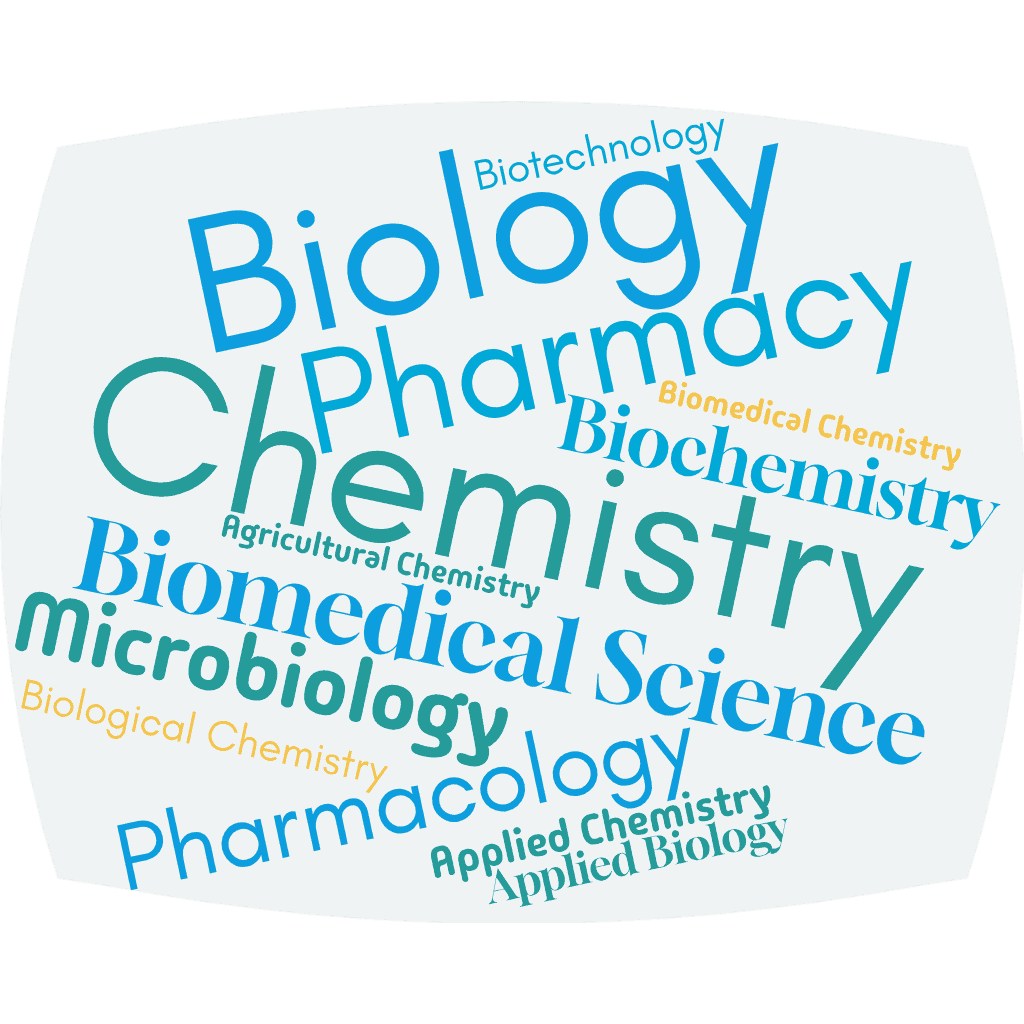
Looking at the responses from our questionnaire, 44% of the respondents had a background in biology including degrees in biological sciences, microbiology and pharmacology. The same number of respondents (44%) had a chemistry background and the final 12% was comprised of people who had studied pharmacy. This mix of disciplines highlights the multidisciplinary nature of DMPK departments, and the variety of skill sets that contribute to their success.
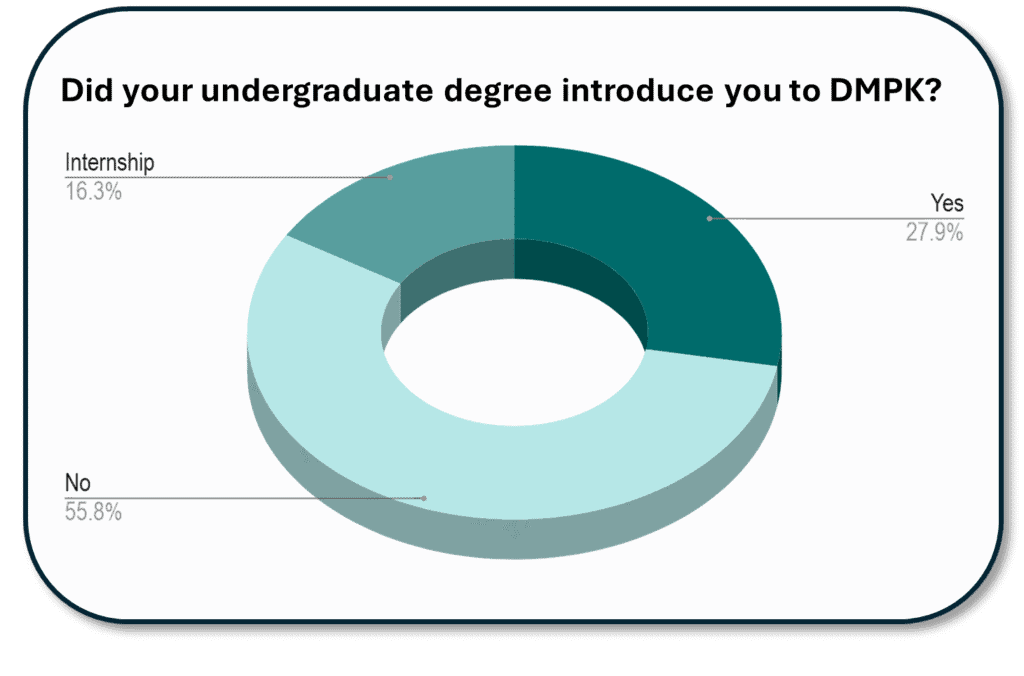
What we find even more relevant is that when asking people if they were introduced to DMPK in their undergraduate studies, a staggering 72% of respondents answered ”no”. Instead, most scientists were first exposed to DMPK either during industrial placements, later in their studies or by chance while job hunting. This demonstrates that DMPK remains a niche field, and many professionals enter it without formal training in the area.
As a result, although training of a new member of a team is always to be expected, especially if they are recent graduates, hiring a scientist without previous experience in a DMPK department requires significant investment in training, as often basic knowledge has not been covered during degree courses. This can be frustrating, not only for the team, but also for the person who is being trained, as they may not develop as quickly as they would like. Career progression also tends to be slower bringing dissatisfaction to new starters.
Additionally, finding suitable candidates for DMPK roles is a more complex and time-consuming process compared to other scientific disciplines. The lack of specialised DMPK training means that there are fewer specialists in the job market, which significantly extends the recruitment process. For senior managers who are used to hiring graduate chemists or biologists with specific training, the prospect of hiring for a DMPK department can seem daunting. Based on their experience, hiring professionals in other departments usually involves less forward planning and shorter training periods. However, in the case of DMPK, finding the right entry level person and completing their basic training often takes more than six months.
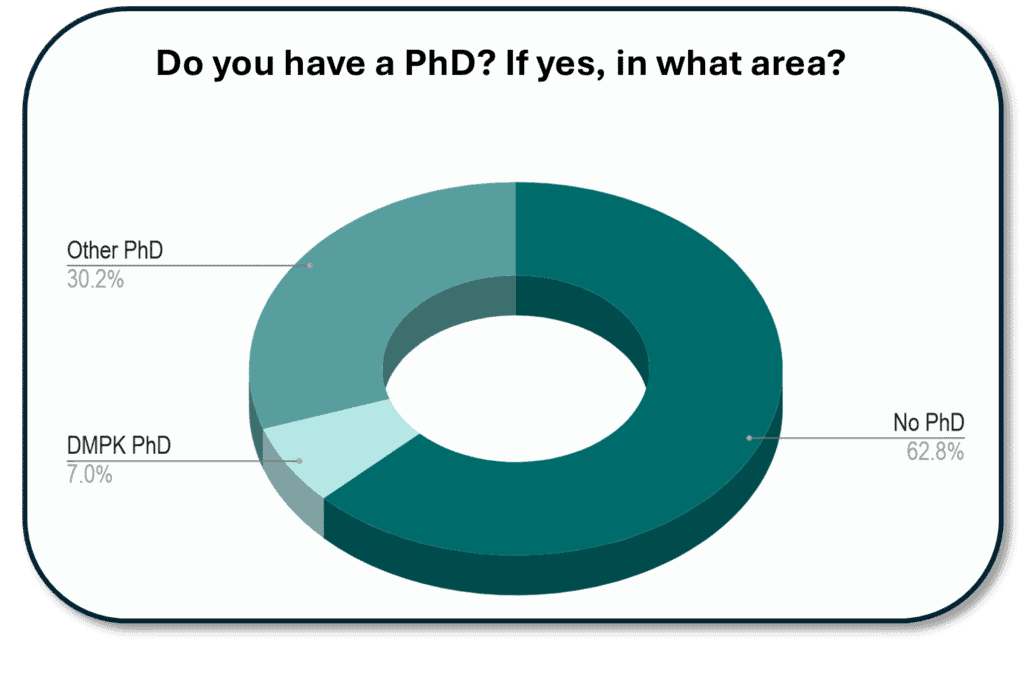
It is also possible that the lack of DMPK training in undergraduate studies contributes to the fact that the DMPK departments are normally formed of more scientists who do not possess a PhD than in other drug discovery disciplines. This was also reflected in the answers to this questionnaire where 63% of the DMPK scientists who answered did not hold a PhD, and of those who did, only 18% of their PhD programmes were related to DMPK.
For that reason, experience, a willingness to learn and be trained on the job, flexibility in career training and an interest in chemistry, biology, and sometimes mathematics is a must for any scientist who wants to be part of a DMPK department. This further underscores the idea that DMPK is a field that often values practical, hands-on experience over formal degrees.
This unique structure begs the question: is the lack of specific DMPK training within universities a negative for the field, or does it contribute to its appeal? DMPK is an interdisciplinary science where knowledge from various backgrounds plays a crucial role. Yes, it requires significant training, and yes, it may mean that professionals develop expertise later in their careers than for other disciplines, but the collaborative and ever-evolving nature of DMPK makes it a dynamic and exciting field to be part of.
In day-to-day work, DMPK scientists collaborate with professionals from a range of backgrounds. A molecular biologist may find themselves learning bioanalytical techniques using LC-MS/MS systems, whilst a synthetic chemist might end up running cellular assays or working in tissue culture lab. Maybe this constant collaboration of ideas and skills is one of the aspects that keeps DMPK scientists motivated. A biologist with an interest in chemistry or a chemist with an interest in biology can build a rewarding career in DMPK, where these diverse interests are valued.
Given this relatively unique position, enhanced workplace training programs and knowledge sharing between companies could help to harmonise DMPK education. By doing so, we can avoid company-specific trends that might limit broader understanding of DMPK. It’s also crucial for the industry to recognise that DMPK must be taught on the job and that specialised education for DMPK is often developed within the workplace rather than through formal academic programs. This is where organisations like the DMDG (Drug Metabolism and Pharmacokinetics Group) come in, offering an invaluable platform for knowledge exchange and training for DMPK scientists.
In conclusion, high performing DMPK departments are diverse, dynamic, influential and often shaped by individuals with a wide array of backgrounds. While the lack of formal DMPK training at the academic level presents challenges, it also makes the field uniquely collaborative, offering diverse career opportunities for those willing to learn and adapt. Knowledge exchange within DMPK departments is a must and many of us have been fortunate to have had exceptional mentors that have helped us in shaping our careers. At Drug Discovery Solutions we are strong advocates of training the next generation of DMPK scientists. We provide mentorship and training whenever is required to our customers and beyond, whilst continually learning ourselves to ensure we deliver the highest level of support to our clients and their projects.
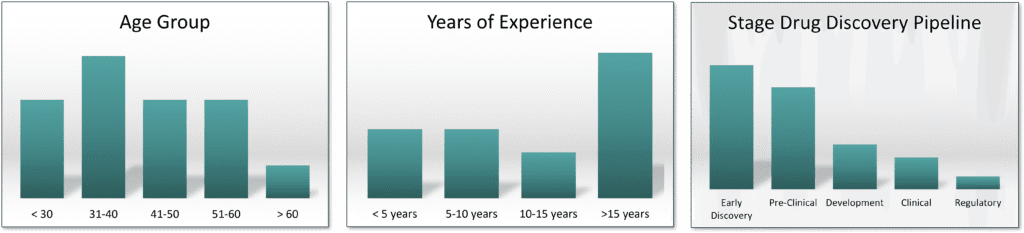
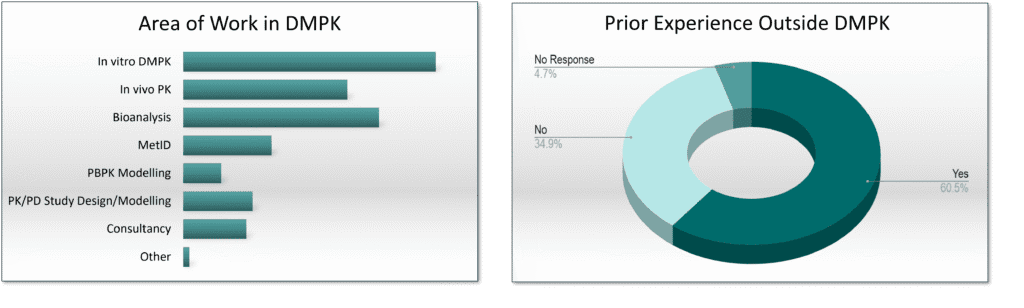
We have included all of the data from the questionnaire below. Do your own experiences reflect this?
Drug Discovery Solutions is a DMPK consultancy company based in Loughborough, UK. We offer DMPK support to a range of clients including in vitro assay protocol review, study design and data review, pharmacokinetic (PK) modelling and simulation and human PK parameter and dose prediction to projects at various stages of the drug discovery process. Click here to learn more about the services we offer or click here to contact us to discuss how we can help your project.